
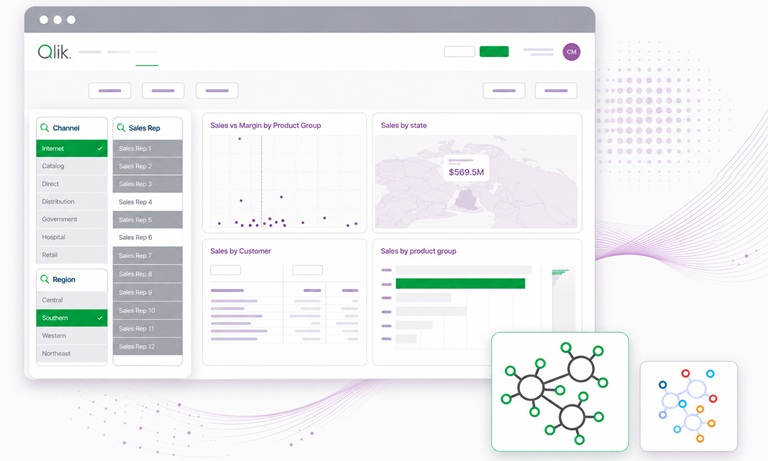
Traditional SQL-based tools limit exploration to linear paths, but the Qlik Associative Engine works through association. By indexing every relationship across all data sources in-memory, it allows you to explore data in any direction. The engine instantly recalculates to reveal hidden connections-highlighting both related and unrelated data-providing “peripheral vision” at the speed of thought

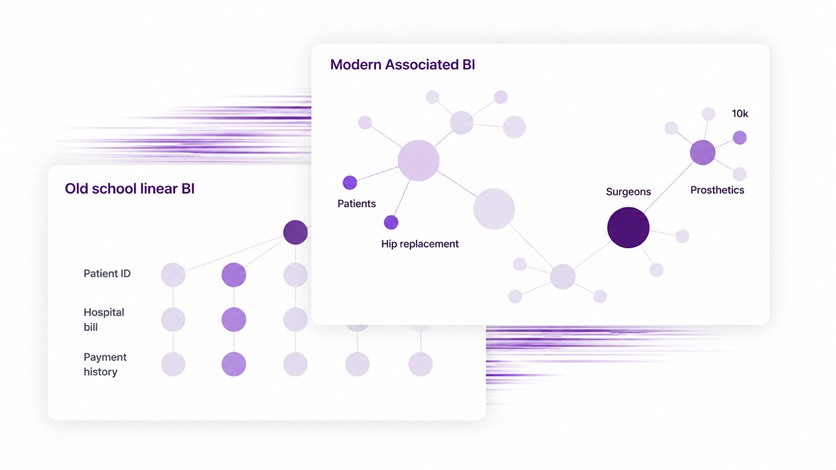
Free Exploration Across All Your Data
- Association Over Joins: Every data point is interconnected, regardless of its source or structure.
- Search Everywhere: Instantly find keywords and associations across your entire dataset.
- Zero Blind Spots: No data is left behind or hidden by restrictive SQL queries.
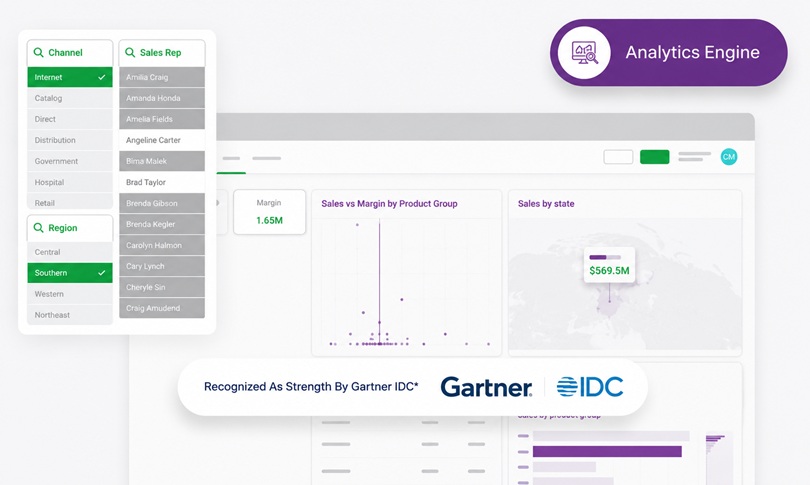
Full Context with Visible Relationships and Gaps
- Context Awareness: See what is related and unrelated to your current selection.
- Identify Gaps: Spot missing values or “lost” business opportunities.
- Transparency: Gain a complete view of the entire dataset at every step of your analysis.
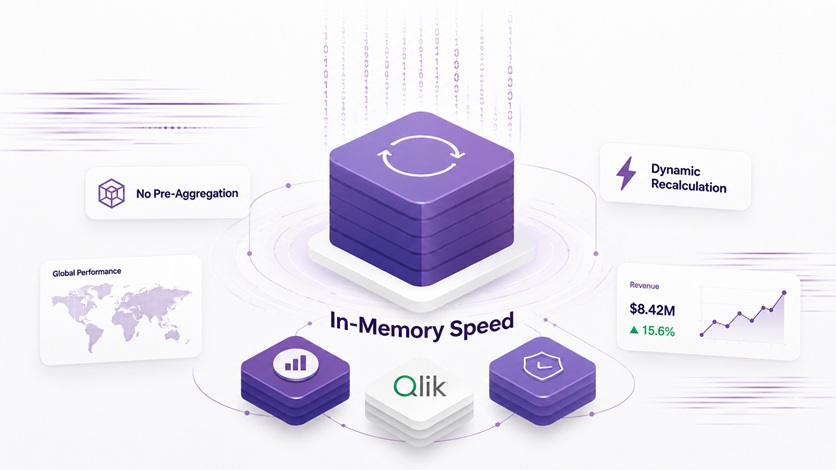
High-Performance Dynamic Calculation
- In-Memory Speed: Patented technology ensures lightning-fast interaction even with billions of rows.
- Dynamic Recalculation: Every chart and metric updates instantly with every click.
- No Pre-Aggregation: Experience total flexibility to ask any question at any level of detail.
Ready to get more from your data?
How Organizations Drive Results with Qlik
Neuroscience-Driven Efficiency

Neuroscience-Driven Efficiency
Sales Opportunity Mapping

Sales Opportunity Mapping
Financial Risk Management

Financial Risk Management
Start exploring your data without limits
Let’s talk. Leave your details below
FAQs
SQL tools are “query-based,” meaning they only show you the specific slice of data you asked for, effectively hiding the rest. Qlik’s engine is “associative,” meaning it keeps all data in context. It indexes every relationship across all tables and allows you to see the big picture and the hidden gaps simultaneously, without being limited by linear joins.
Qlik uses patented binary compression that significantly reduces the data footprint, often by as much as 90%. This allows the engine to hold massive amounts of data in a relatively small memory space. Additionally, it only calculates what is needed for the current view, ensuring high performance even with enterprise-scale data.
Yes. One of the engine’s greatest strengths is its ability to load data from disparate sources (Excel, SAP, Snowflake, etc.) even if it isn’t perfectly clean. The associative model helps expose data quality issues, such as missing links or inconsistent values by highlighting them in the gray areas so they can be fix them at the source.